
Stark County City Directory Holdings
Stark Library is the central route for historical city directories in Stark County. Its Historical News Archive searches more than a century of local publications converted from microfilm, including the Canton City Directory, the Canton Daily News, the Stark County Democrat, and the Stark County Republican. The archive describes a 1810 to 1946 publication span, but it does not publish a complete edition-by-edition directory bibliography. Ask Family & Local History staff or use the catalog when one specific year matters. The library also identifies the current Canton City Directory and the Canton Haines Criss+Cross Directory as its local reverse-information tools.
| Local collection | Verified dates | Stark County holder | Best access route |
|---|---|---|---|
| Canton City Directory | Included in the 1810-1946 Historical News Archive; 2022/2023 Polk volumes acquired | Stark Library | Archive search, catalog, or Family & Local History help |
| Canton Haines Criss+Cross | Exact run not published | Stark Library | Reference desk and in-person collection |
| Canton Repository | 1815 to present | Stark Library | Microfilm and Newspaper Archive access |
| Probate indexes and microfilm | Series range from 1809 into the 1980s | Probate, Stark Library, University of Akron | Counter, microfilm, archival request, or staff guidance |
The February 2025 collection update specifically names Canton and Surrounding Areas, Ohio, Polk City Directory 2022, 2023, Volumes 1 and 2, published in Livonia by Polk City Directories in 2023. That verifies those modern volumes, not an unbroken Polk run. Treat the archive range as collection coverage and request help for each needed edition.
Stark County City Directories in the Archive
The Stark Library genealogy resources route pairs a city-directory search with newspapers. A directory can show the printed address and work description for a listed adult; a newspaper can test that address through an obituary, sale notice, club notice, or business advertisement. This pairing is especially useful when a surname has several spellings or a person disappears between available editions. It also avoids treating an address line as a full household list.
The Historical News Archive is a digital starting point, while the library remains the fallback for microfilm, reference help, and databases that are available only inside the library. Ancestry Library Edition is expressly an in-library resource. Family & Local History provides free customized assistance, appointments, an online request form, and local address, census, military, and newspaper materials. For an in-person visit, the service is on the second floor of the temporary Main Library at 1020 Market Ave. N.; confirm current hours and location before traveling.
See the Historical News Archive and directory gateway before selecting a volume or newspaper title.
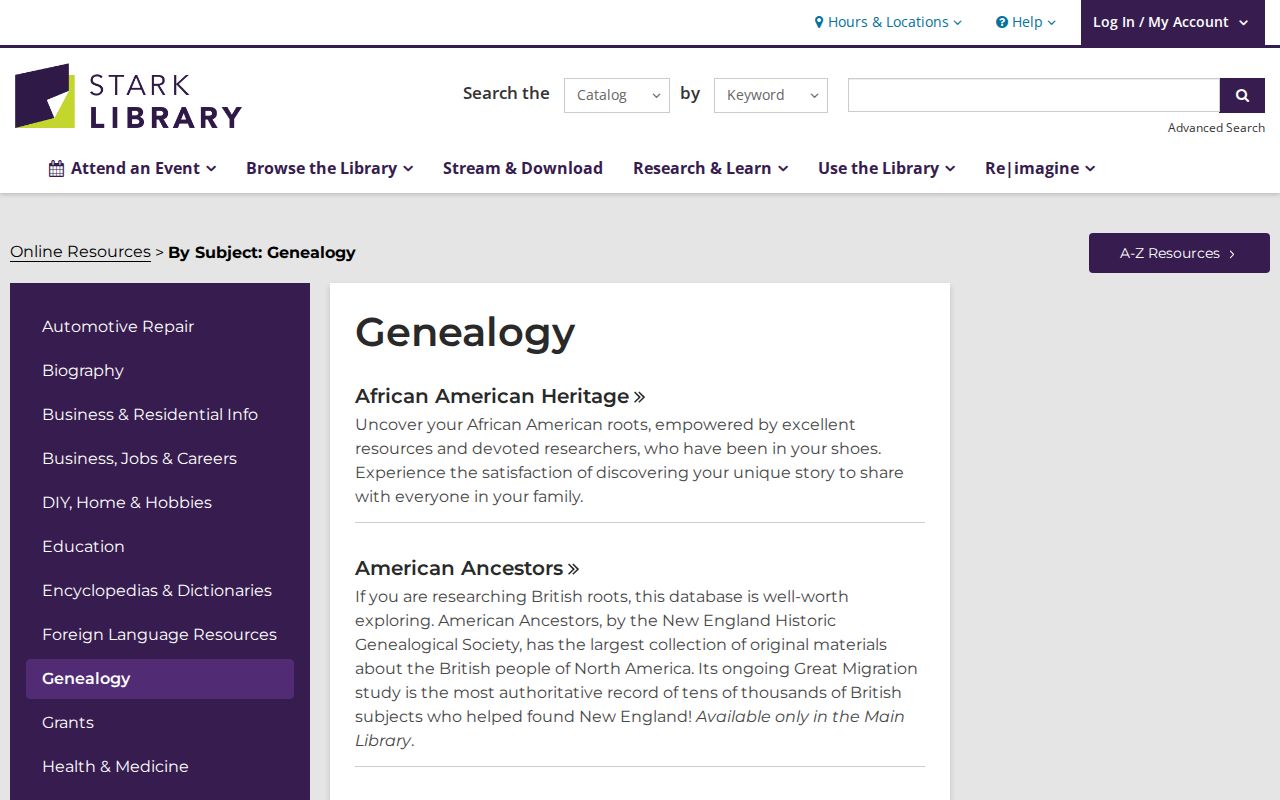
The source screen helps separate the digitized publication route from the in-library and microfilm routes that may be needed for a particular edition.
Stark County Directory Gaps by Year
A missing name does not automatically show a move. Stark Library says the Canton City Directory was annual in some periods, biennial in others, and had a three-year World War II publishing gap. The current edition is annual. A person may also be absent because city directories focus on working adults rather than every person who lived at an address. Record the actual edition year before comparing it with the next available volume.
- Write down the exact date printed on the directory volume, rather than assuming every year exists.
- Check the closest earlier and later available Canton editions for the same spelling and address.
- Use the Historical News Archive or Repository notices to test a move, death, business change, or marriage.
- Pair the interval with the appropriate federal census, keeping in mind that Ohio's first available federal census is 1820 and 1850 is the first to name every household member.
Federal census access changes over time, so verify the current release date with the federal source instead of assuming every later schedule is open. Before 1850, a census usually names only the household head and age or sex groups. That makes dated city-directory and tax-index evidence more useful, but still not conclusive, for earlier Stark County households.
Note: A three-year publishing break or a biennial schedule is a records gap, not proof that a family left Stark County.
How Stark County City Directory Entries Read
Stark Library describes a city directory as a list of working adults in the town at the time of publication. Employed adult men commonly appear. Wives are generally shown by first name after a husband's entry, employed unmarried women and some older children can appear, and widows may be listed under their own name with a widow notation. The pattern makes an entry valuable for family history, but it also means a directory is not a full census or a legal ownership record.
| Printed name | Use the exact initials, spelling, and name order as search terms in nearby editions and newspapers. |
|---|---|
| Address | A dated residence or listed location, useful for a Haines Criss+Cross check but not proof of ownership. |
| Work information | An occupation or employer clue that can distinguish people with the same name. |
| Family notation | A wife, widow, or similar notation can point to marriage, obituary, or probate research. |
| Edition year | The date that makes the entry comparable with census, deed, tax, and newspaper evidence. |
- Criss-cross directory
- A reverse directory arranged by address. Stark Library uses the Canton Haines Criss+Cross Directory to connect a printed address to a listed name in a particular edition.
- Householder index
- An alphabetical route to the principal listed person. It should not be read as every person in a residence.
- Abbreviation key
- The volume's explanation of its own shortened labels. A key must be read from that edition instead of guessed from a different publisher's book.
Stark County's Criss+Cross Address Route
For an old Canton address, the Haines Criss+Cross directory is the first local reverse-directory channel. Give Family & Local History the street and number, select the closest available edition, and copy the listed name exactly. Then turn to the alphabetical Canton City Directory from the same year for occupation and household-style detail. The public research does not verify the beginning or ending years of the Haines run, so staff or catalog help is the responsible way to find a needed date.
A reverse entry places a listed person at an address for that edition. It does not establish ownership, every occupant, or continuous residence. Test the result with a census, local newspaper, current parcel history, or recorded conveyance when the question requires more than a dated address association. Modern parcel and deed work belongs to the Stark County street directory route, rather than the historical shelf.
Stark County Probate Records for Families
Historic estate, administration, will, and guardian indexes can extend a city-directory lead into documented family connections. Stark Probate retains estate files since 1810 on microfilm and has public indexes, dockets, and images of pending cases, although its counter record is official. Records Center staff can show visitors how to use indexes, but the court does not perform genealogy searches. For records beyond the current online result, call the Records Center at 330-451-7753 or use the court, library, and archive routes identified for the series.
Older custody is intentionally split. Stark Library has administration and guardian docket indexes, marriage and naturalization material, will indexes, and vital-record microfilm. University of Akron Archival Services holds original historic birth and death records, marriage dockets, naturalization, and other probate series. The 1988 archival transfer preserved these valuable series at the library and university rather than making the courthouse the only path.
The Stark County Index Files provide the online index route, while the Probate historical-records listing helps choose the court, Stark Library, or University of Akron route.
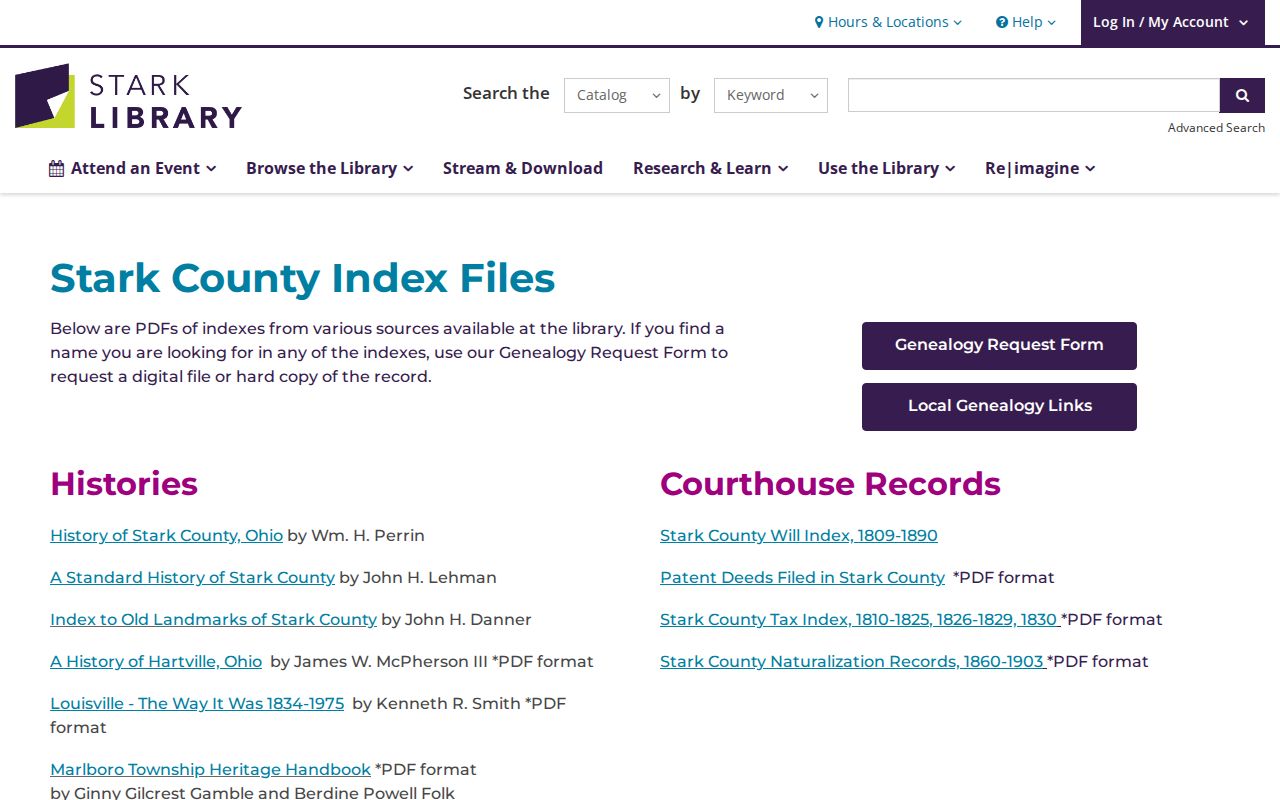
The index collection is a lead to the volume, page, docket, or underlying file, not a substitute for examining the record itself.
Note: Probate index entries identify a record path and court role, so confirm the underlying file before drawing a family conclusion.
Trace Families Through Stark County Directories
Build a household trail with dated documents, not assumptions. Begin with the first verified entry, follow the exact spelling through adjacent available editions, and record address changes. Pair each directory interval with the applicable census and local newspaper. For an owner, the Auditor profile and Recorder conveyance chain add the parcel and legal-description layer. For a renter or other household member, directories, census, yearbooks, newspapers, and probate material often provide the better evidence.
- Find a name or address in the closest available Canton City Directory or Haines Criss+Cross edition.
- Capture the edition year, printed address, names, occupation, and any family notation.
- Search the alphabetic directory and the nearest available volumes, allowing for the annual, biennial, and wartime gaps.
- Compare the dated address with the appropriate federal census and a newspaper notice.
- Use a probate index, obituary, cemetery route, or estate file to close an era and verify relationships.
When a name vanishes, several explanations remain possible: a move, death, changed work status, changed marital status, a spelling change, selective directory practice, or a missing publication year. A conclusion should wait for an independent record. This method protects a family-history search from turning one short entry into a claim it cannot support.
Stark County Homes in Stark Memory
Stark Memory adds physical and community context to a city-directory search. Its digitized collections include Canton Homes, Businesses, Civic Buildings, Churches, Hospitals, Schools, fraternal organizations, and Black oral history of Canton. A historic photograph, document, or oral-history item can help date a building appearance or show what stood nearby. It does not, by itself, prove who lived in the property at a given time.
Open Stark Memory's local digital collections when a directory address needs a building or neighborhood context check.
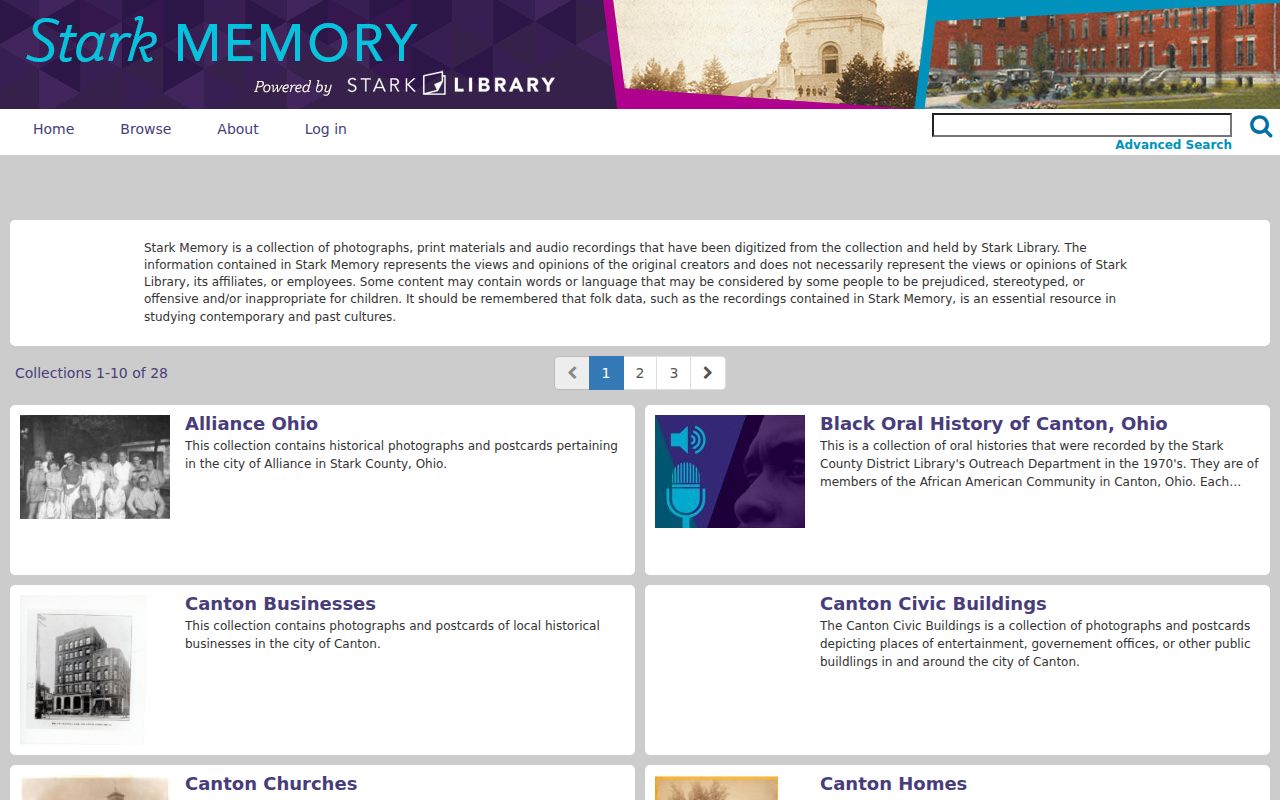
Use a caption as a research lead, then match it to a dated directory, map, deed, newspaper, or probate record before naming an occupant.
Note: A historical photograph can date a place or setting, but it cannot establish a resident without a dated supporting record.
Stark County Family History Access
Family & Local History was renamed from the Genealogy Department in 2025, while the underlying research service continued. It offers appointments, research requests, staff assistance, local index files, and licensed databases. The current local-history collection remains a useful route whether the question is an old Canton directory, a deed or tax index, an obituary, a yearbook, or a probate reference. Library staff can help identify a known volume, but an exact record request is more effective when it includes the name, address, approximate date, and record type.
Start with the Family & Local History service for requests and visit planning. The department update documents the service's 2025 name change.
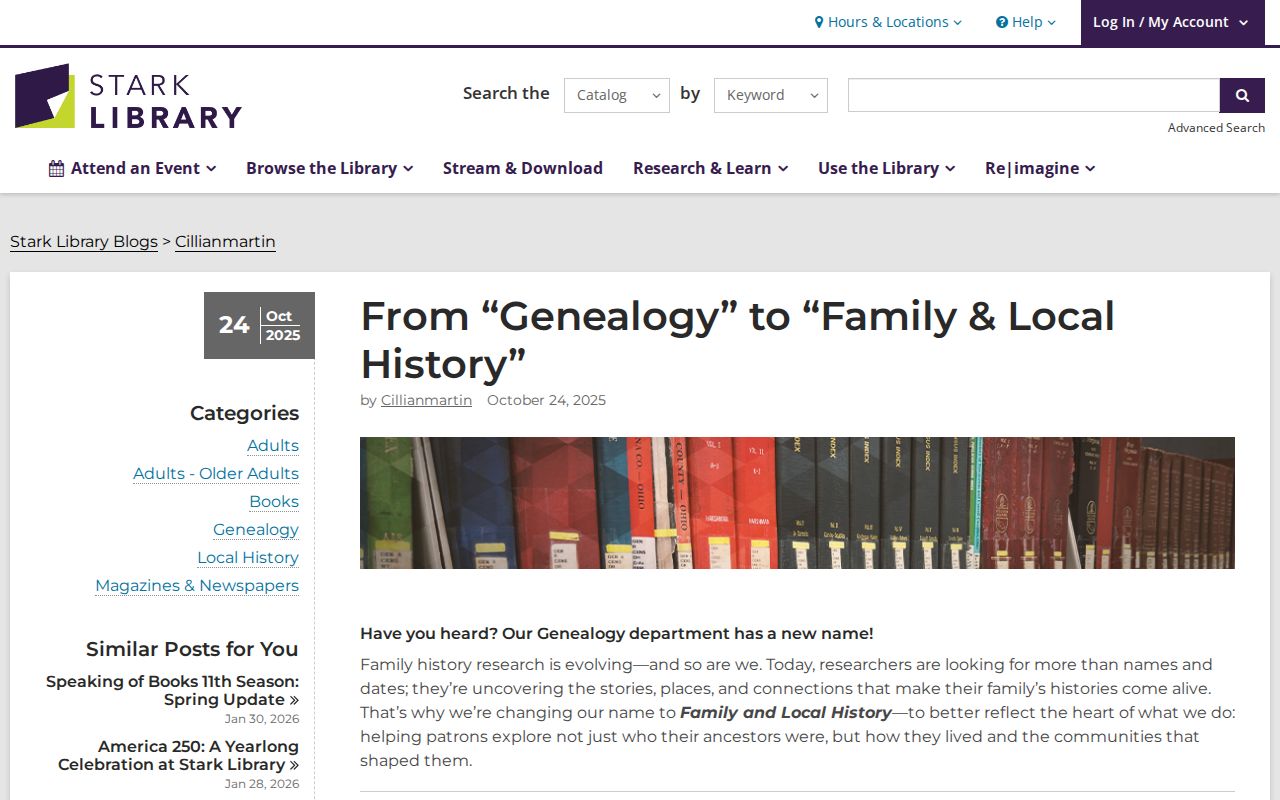
The service screen identifies the assistance route that supports a city-directory search when an online search does not expose the needed volume.
The city department directory is useful for locating a municipal custodian, not for identifying residents. Consult the Canton department directory when the historical question shifts to a city-held permit, planning, code, or engineering record.
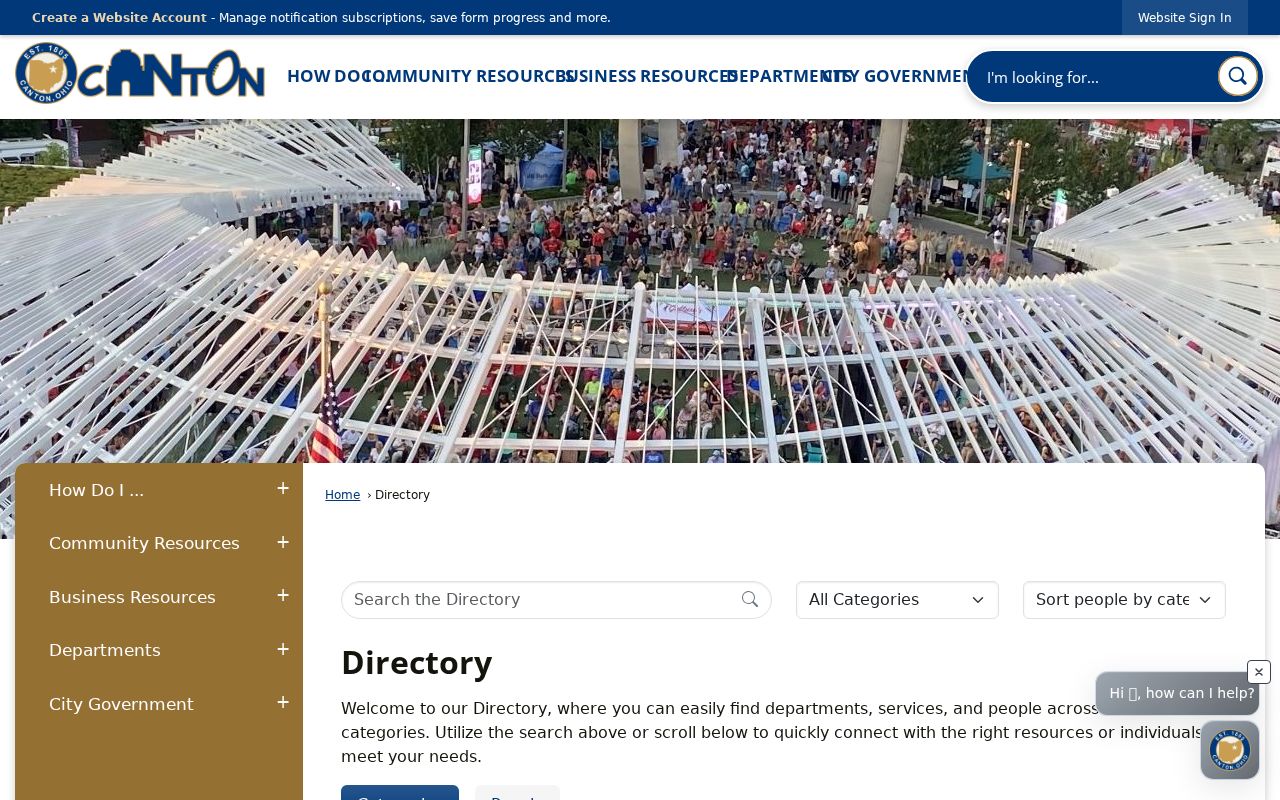
That source helps route a narrow municipal-record question without presenting a staff directory as a resident directory.
Modern Stark County Directory Additions
The library's 2025 collection update confirms the Canton and Surrounding Areas Polk City Directory volumes for 2022 and 2023. That is a useful modern reference point alongside historical work, but a library acquisition does not establish that every resident is included or that every earlier year uses the same publisher and format. Compare the edition with dated public records when a name, household, or property history matters.
See the library's Polk directory acquisition notice for the verified 2022/2023 collection addition.
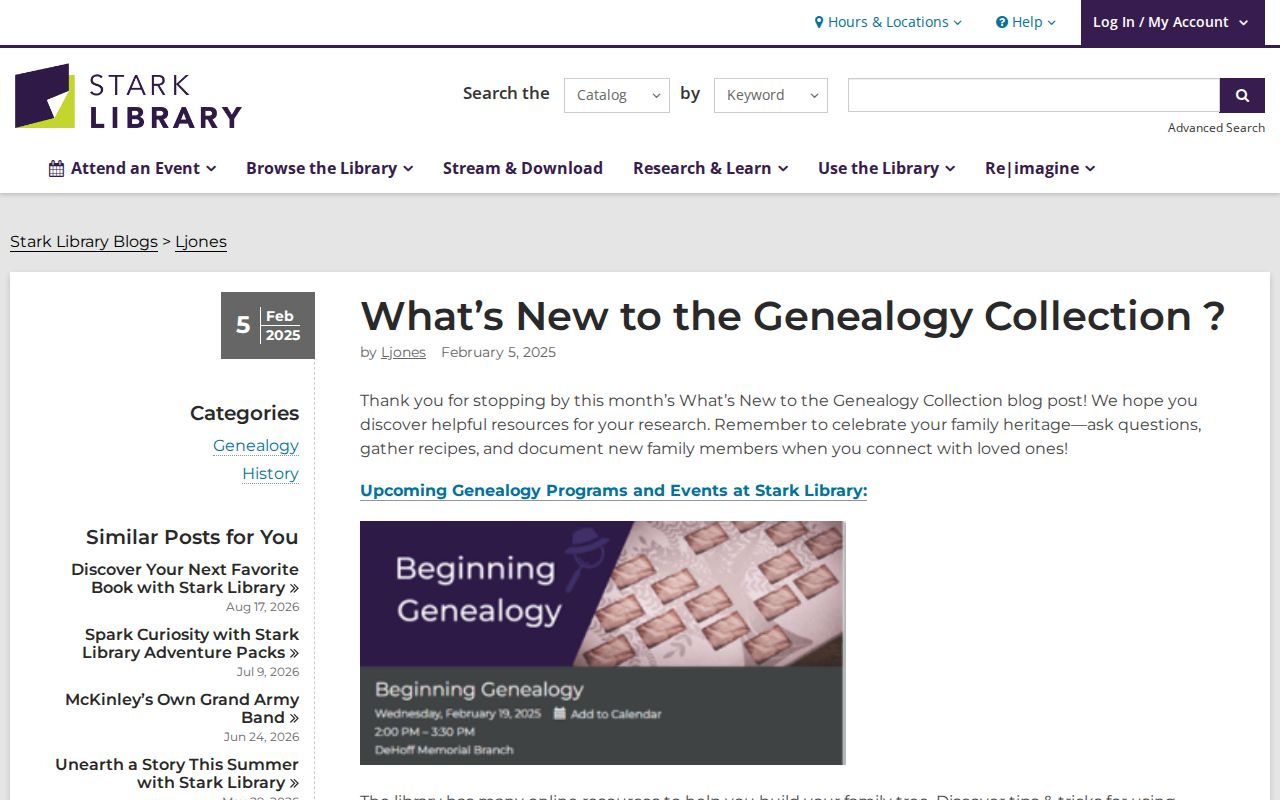
The collection notice documents the modern volumes and their publisher without filling the unverified historical bibliography gaps.